


Future Technologies
Introduction
In the evolutionary shift of the tech world into artificial intelligence, humanity is the ultimate threshold. Previously, science fiction was stories only heard, like everyday growing infrastructure. However, in today’s era, the confluence of computational power, bioengineering, and materials science is accelerating and reshaping technology in every aspect. From the paradigm shift in how we generate clean energy to how we diagnose illnesses, machines have been a constant companion in technological trends. Listed below are 10 core future technologies that are aimed at reshaping human capability before the closing of this decade.
Top 10 future technologies
Long-lasting storage of solid-state batteries

The transition from energy usage to global clean energy storage is a lifetime challenge. The traditional lithium-ion batteries are not only dense but also face risks against thermal safety and shortages in the supply chain of raw materials. Thus, they need to be replaced with something solid made of either ceramics or polymers with significantly less weight but large energy storage capacities, superior thermal safety, and faster charging times. It thus remains one of the vital future technologies that will stabilize green power grids relying solely on wind and solar energy.
Brain-computer Interfaces (BCIs)
 Technology and science are rapidly moving towards each other and tending to bridge digital hardware with neural pathways. Starting from clinical trials, brain-computers make use of non-invasive neural sensors to convert brain electrical signals into digitalized commands. This ongoing AI technology innovation with core learning algorithms is helping paralyzed patients regain mobility or speech. Also, cognitive monitoring through this interface is opening new frontiers to human-machine interaction.
Advanced AI with autonomous agentic systems
 The use of AI so far has shifted agentic systems into a fundamentally altering knowledge economy. Entities of AI that can work to execute multi-step workflows and make logical decisions without human intervention are going to hit the next era of 2030 with huge digital projections. Continued AI technology innovation will dynamically shift traditional workloads into autonomous standard operations involving software engineering, customer relations, and logistics strategically.
Switching to 6G bandwidth wireless networks
 In the era of network-level technology trends, 6G will position itself as the digital nervous system linking smart cities. Apart from integrating environmental sensing and special computing, 6G will design the modern telecommunication architecture. All commercial deployments around 2030 will be catered by this ultra-bandwidth network that has promised data transmission speeds up to 100 times faster than 5G. This level of networking is going to create real-time holographic communications and swarm engagement for autonomous logistics.
Hybrid quantum computing
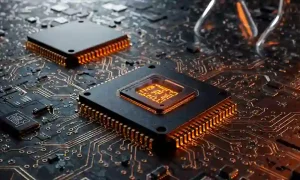 It is considered one of the most powerful emerging technologies that has made significant discoveries in material science previously intractable. The hybrid quantum-classical platform is designed to optimize the financial portfolio of the drug-designing industry along with complex molecular modelling. Quantum hardware has shifted into the spotlight by replacing classical silicon microprocessors. Quantum processors are dedicated to solving complex mathematical operations and chemical simulations by using Qubits.
Electric air mobility and the concept of autonomous transportation
 It is one of the primary future technologies that is going to tackle urban population and transit emissions. Urban Air Mobility (UAM) using electric vertical take-off and landing (eVTOL) is disrupting the commercial airspace. Its positive impacts, like quiet and zero emissions and bypassing ground traffic to connect airport hubs, is driven by evolved machine learning and advanced sensor fusion. It is driven by advanced sensor fusion with digitalized machine learning.
Immutable digital identity through widespread trust
 These days, interactions are mostly online. Therefore, verifying user privacy, data authenticity, and digital ownership are apex priorities. Diving into cryptographic verification in various systems is one of the crucial future technologies safeguarding user identity and digital economics. Individuals are empowered to verify their credentials through decentralized platforms without having to compromise their personal information to 3rd parties. Additionally, blockchain architecture is expanding to secure global supply chains and manage digital identities without server risks.
Special computing in extended reality (XR)
 Defining consumer needs by technology trends and reshaping how humans will interact with digital communities has been simplified by the use of special computing. Now, physical environments have connected to interactive digital interfaces by use of commodities like virtual displays, high-resolution headsets, and augmented reality (AR) glasses to enjoy 3d data. Infrastructure design, medical training, and remote workplace communication can all be digitally built up even in industrial exospace, reducing the difficulties associated with developing labor-intensive physical gear.
Precision genomic therapies.
 Nowadays, new gene editing tools have transformed the biological world through the introduction of bio medicines. The biological editing system is the most transformative emerging technology in modern medicine. It not only alters clinical outcomes but also modifies their preventive measures. From a broad reactive statement, genomic editing targets point mutations in human DNA with such precision without causing breaks in double-stranded DNA. It is an effective curative treatment for hereditary blood disorders, challenging cancers, and rare genetic conditions. Personalized drug therapies are the replacement for modern medicine for the permanent cure of complex diseases.
Use of synthetic biology in food productions
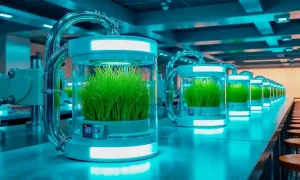 It is one of the promising emerging technologies that has successfully created global food supply chains resistant to climatic adversity. With the use of synthetic biology coupled with genetic engineering and tissue engineering, cultivating meat from the cells of animals has become easier. Animal proteins are also synthesized by fermenting bio processes. The promising factor of this food production is that it requires 96% less water and land and also reduces greenhouse emissions.
Conclusion
Thus, the true impact of the above technological breakthroughs has a powerful compound effect in shaping the future era. Rapid AI technology innovation is known to speed up genomic sequencing analysis. Institutions that are ready to accept these future technologies are going to have long-term resilience against any sort of market disruption. These prospects are going to benefit the public by mitigating ethical challenges and cyber risks by 2030. By recognizing these future technologies, various organizations can proactively steer their development and solve critically challenging problems of humanity regarding healthcare, energy usage, and climate change.
