

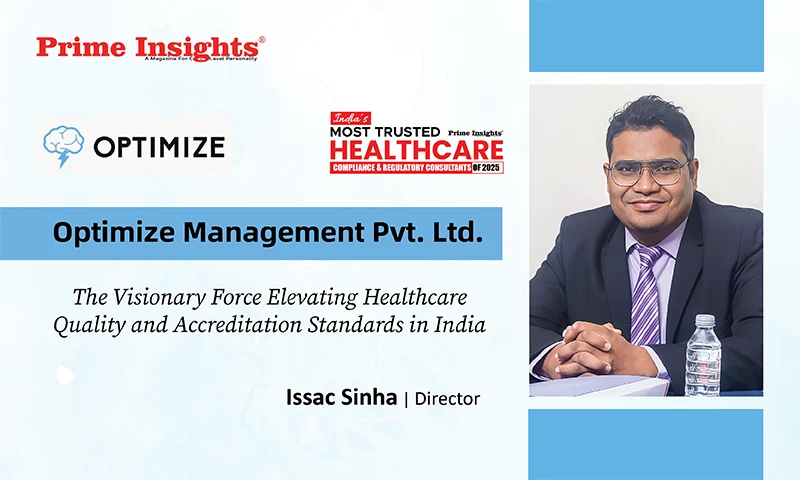
Optimize Management Pvt. Ltd.
A hospital can have world-class doctors, cutting-edge technology, and modern infrastructure—yet still fail an accreditation audit because of a missing SOP or an undocumented process. This paradox lies at the heart of India’s healthcare ecosystem today.
India’s healthcare and life-sciences sector is at a defining crossroads. Rapid expansion, rising patient expectations, medical tourism ambitions, and national digital initiatives such as the Ayushman Bharat Digital Mission (ABDM) have intensified the demand for strong compliance, governance, and patient-safety frameworks. At the same time, intense competition among hospitals, clinics, diagnostics, and laboratories has made accreditation and regulatory readiness a decisive differentiator. In a landscape shaped by evolving standards such as NABH, JCI, ISO, CDSCO, and NABL, quality is no longer just about clinical excellence—it is about systems, accountability, and trust.
Amid this complexity stands Optimize Management Pvt. Ltd., a healthcare compliance and regulatory consulting firm founded in 2016 with a clear and purpose-driven vision. Led by Issac Sinha and Dr. Vaishali Sinha, Directors, the organization was born from years of hands-on experience within India’s fragmented healthcare system. With over 15 years of industry exposure, Issac Sinha’s background in life sciences, quality systems, healthcare management, and digital health—further strengthened by the Senior Management Program in Healthcare Management at IIM Kozhikode—shaped a consulting model that goes beyond checklists. Together, the leadership duo champions a powerful belief: compliance should be a pathway to patient safety, operational excellence, and long-term trust.
What truly differentiates Optimize is how it works on the ground. The firm delivers customized, practical solutions—ranging from gap analysis, accreditation roadmaps, SOP development, and infection control systems to digital compliance dashboards, ABDM alignment, capacity building, and continuous mentorship—ensuring quality is embedded into daily operations rather than treated as a one-time exercise.
In the spotlight are Issac Sinha and Dr. Vaishali Sinha (Directors), featured in an exclusive interview for our prestigious “India’s Most Trusted Healthcare Compliance & Regulatory Consultants of 2025” edition. Gain insights from their entrepreneurial journey, leadership philosophy, and lessons on building a purpose-driven organization that elevates India’s healthcare quality standards. Stay tuned to discover their inspiring story of impact and success.
Prime Insights: Can you share the journey and vision behind establishing your healthcare compliance and regulatory consulting practice?
The journey of establishing our healthcare compliance and regulatory consulting practice began in 2016 with a deep recognition of the gaps in quality assurance and regulatory preparedness across many hospitals and healthcare institutions in India. Early in my career, while working on accreditation projects and operational improvement initiatives, I saw first-hand how even well‑intentioned organizations struggled to align with standards like NABH, JCI, and ISO. This inspired me to create a practice that not only guides institutions through compliance but also build a culture of patient safety and operational excellence.
From industry insights of the my last 15 years of work exposure with SME hospitals & Corporate groups and the learning experiences I gathered post the COVID 19 pandemic, this added much meaning to the aspect of Quality and service delivery in Healthcare. I was also a part of the first batch of Senior Management Program in Healthcare management at IIM Kozhikode, having spent a year of analysis of both the pros and cons of India’s vast yet fragmented and unorganized Healthcare sector, Optimize management Pvt. Ltd. took shape as a consulting organization to cater to this challenging landscape in a structured and impactful manner
Foundational experiences: My background in Life sciences, Quality systems, healthcare management and digital health technology gave me both the technical expertise and systems perspective to design solutions that are practical, scalable, and sustainable.
Catalyst moments: Working closely with our clientele from large hospitals to smaller clinics, this journey revealed the urgent need for structured SOPs, infection control protocols, and digital integration. These projects became the stepping stones for my independent consulting practice. I recollect many such incidences which motivated me to take leadership and address the larger market and not just sit comfortably in a single steady job. That is how Optimize came into existence as we have teamed up to drive the Quality movement in healthcare with ethical zeal yet affordable pricing for our services
Vision: At the heart of my practice is the belief that compliance should not be seen as a burden but as a pathway to trust, efficiency, and better patient outcomes. My vision is to empower healthcare organizations to achieve accreditation not just for certification, but to truly embed quality into their DNA.
India’s ancient wisdom, especially Ayurveda and Yoga, laid the foundation for holistic healing shaping early forms of medical tourism. Rooted in a 5,000-year-old philosophy of balance between body, mind, and spirit, Ayurveda offered natural remedies, detox therapies, and preventive care that drew travelers from Asia, the Middle East, and later Europe. This legacy of wellness tourism, blending cultural immersion with medical care, positioned India as one of the earliest global hubs where healthcare was not just treatment, but a transformative journey. We at Optimize, are focussed on boosting India’s Healthcare Quality as the world’s best, so that we become the world’s most preferred healing destination once again.
Impact goals: At Optimize, we aim not only aim to motivate the top management of our clientele healthcare institutions but also build capacity among healthcare professionals through training, updated educational materials, and one to one on the floor interactions, ensuring that knowledge reaches both management and frontline staff.
Prime Insights: What core principles or values guide your consulting approach in India’s evolving healthcare ecosystem?
India’s healthcare ecosystem is dynamic—balancing rapid growth, regulatory evolution, and the pressing need for patient‑centric care. My consulting approach is anchored in a set of core principles and values that ensure both compliance and sustainable impact:
- Patient safety first: Every recommendation, SOP, and accreditation effort is designed to minimize risk and enhance outcomes for patients.
- Integrity and transparency: I emphasize ethical practices, clear communication, and unbiased guidance, ensuring trust between hospitals, regulators, and patients.
- Capacity building: Beyond compliance, I focus on empowering healthcare professionals through training, bilingual resources, and knowledge transfer so that improvements are lasting.
- Systems thinking: I view hospitals as interconnected ecosystems, aligning clinical, operational, and digital processes to create holistic solutions.
- Adaptability to change: With India’s healthcare regulations and digital health initiatives evolving rapidly, I ensure strategies remain flexible and future‑ready.
- Equity and accessibility: I advocate for solutions that make quality healthcare accessible across diverse geographies and socioeconomic groups.
- Sustainability and innovation: Whether through biomedical waste management or smart hospital solutions, I integrate practices that are environmentally responsible and technologically progressive.
Prime Insights: What major compliance and regulatory challenges do healthcare organizations face today, and how do you help them navigate these complexities?
Healthcare organizations face growing compliance challenges—from evolving accreditation standards (NABH, JCI, ISO) and infection control to digital health integration under ABDM and overlapping regulatory mandates. Resource constraints and resistance to change further complicate compliance efforts. At Optimize, we simplify and embed compliance into hospital culture through structured gap analyses, phased roadmaps, SOP development, staff training, and end-to-end accreditation support. We also provide digital health advisory, operational improvements for patient safety and infection control, and continuous mentorship—helping hospitals achieve sustainable, practical, and cost-effective regulatory compliance.
Prime Insights: How do you stay updated with rapidly changing national and international healthcare regulations, such as NABH, ISO, JCI, CDSCO, GCP, and HIPAA?
Healthcare regulations evolve rapidly, making it critical to stay ahead to provide relevant and actionable guidance. My approach combines continuous learning with practical application. We closely monitor updates from NABH, CDSCO, ISO, JCI, and global regulatory bodies, while actively engaging in professional networks and accreditation forums. Our academic involvement with IIHMR and collaborations with institutions keep us aligned with research and policy developments. Ongoing certifications in digital health, GCP, and HIPAA ensure global relevance. Through workshops, training programs, global benchmarking, and digital compliance alerts, we translate evolving regulations into clear, practical strategies that help healthcare organizations remain compliant, resilient, and future-ready.
Prime Insights: What customized compliance frameworks or methodologies have you introduced to ensure high standards of patient safety and organizational accountability?
To uphold patient safety and organizational accountability, we have developed customized frameworks that go beyond standard accreditation checklists while aligning with global best practices. Our integrated accreditation roadmap unifies NABH, JCI, and ISO requirements into a phased, manageable pathway. We embed patient safety into daily operations through practical safety culture models, realistic bilingual SOPs, and role-based training across clinical and non-clinical teams. Our approach also includes sustainable biomedical waste management, infection control systems, and a PDCA-driven continuous improvement cycle. Together, these frameworks help hospitals achieve accreditation while embedding accountability, safety, and operational excellence into everyday healthcare delivery.
Prime Insights: Can you highlight a case where your intervention significantly improved a healthcare institution’s compliance readiness or accreditation success?
One of the most impactful interventions we led involved a 150-bedded private hospital in Nagpur preparing for NABH accreditation. The hospital faced fragmented documentation, inconsistent infection control practices, and limited staff awareness of accreditation standards. We began with a comprehensive gap analysis to identify deficiencies in SOPs, biomedical waste management, and patient safety protocols. A phased compliance roadmap was then introduced, aligned with NABH requirements and operational realities, supported by bilingual SOPs for staff clarity. Through structured training programs, workshops, and mock audits, accountability was embedded across all levels. A digital compliance dashboard enabled real-time monitoring of safety indicators and audit readiness. Within ten months, the hospital achieved NABH accreditation, improved patient satisfaction, and enhanced operational efficiency.
Prime Insights: How do you approach risk assessment and regulatory audits for hospitals, clinics, pharmaceuticals, and medical device companies?
Our risk assessment and regulatory audit methodology is systematic, evidence-based, and tailored to hospitals, clinics, pharmaceutical companies, and medical laboratories. We begin with holistic risk mapping through structured gap analyses covering patient safety, infection control, biomedical waste, data privacy, and operations. Each audit is aligned with relevant standards such as NABH, CDSCO, ISO, JCI, GCP, HIPAA, and NABL. Sector-specific audit protocols ensure practical relevance, while stakeholder engagement builds ownership at all levels. Training, bilingual SOPs, and digital dashboards support real-time monitoring. By embedding PDCA cycles, we transform audits into continuous improvement tools that strengthen compliance, resilience, and organizational trust.
Prime Insights: What technologies or digital compliance tools do you use to streamline monitoring, reporting, and documentation for clients?
To streamline monitoring, reporting, and documentation, we integrate a range of digital platforms and customized tools that make compliance efficient and sustainable. Our approach includes real-time compliance dashboards for tracking patient safety indicators and audit readiness, secure electronic document management systems for SOPs and records, and customized digital audit and risk assessment tools aligned with NABH, JCI, ISO, CDSCO, and HIPAA. We also deploy incident reporting applications, data analytics and BI platforms, and integrate compliance within ABDM-aligned EHR systems. Together, these tools reduce manual effort, improve transparency, and embed compliance into everyday healthcare operations.
Prime Insights: How do you ensure that healthcare providers maintain long-term compliance beyond the initial implementation?
Achieving compliance is only the first step; sustaining it is the real challenge. At Optimize, we embed compliance into hospital culture, systems, and daily operations. We integrate accreditation standards into routine workflows, supported by continuous training, updated SOPs, and strong leadership engagement through governance structures and clear accountability. Digital dashboards enable real-time monitoring of patient safety and audit readiness, while periodic internal and mock audits drive continuous improvement. We also support change management to overcome resistance and provide ongoing regulatory updates aligned with NABH, CDSCO, ISO, JCI, and global standards. Our sustainability-focused frameworks ensure cost-effective, environmentally responsible practices—transforming compliance into a living system of accountability and patient safety.
Prime Insights: What role do you believe Management consultants play in improving patient outcomes and organizational transparency?
Management consultants act as a vital bridge between regulatory standards, operational systems, and patient care—ensuring compliance drives real improvement rather than checklist completion. They translate complex regulations into practical SOPs and workflows that enhance patient safety and reduce risk. By designing audit frameworks, dashboards, and reporting mechanisms, consultants strengthen transparency and organizational accountability. Through structured training and capacity building, they empower staff at all levels to take ownership of compliance. Consultants also simplify overlapping requirements from NABH, JCI, ISO, CDSCO, GCP, and HIPAA, allowing healthcare providers to focus on care delivery. Beyond accreditation, they embed continuous improvement cycles, ethical practices, and transparent reporting—building long-term trust, safer environments, and better patient outcomes.
Prime Insights: How do you address common compliance gaps related to data privacy, cybersecurity, and patient information handling?
Management consultants play a crucial role as the bridge between regulatory standards, operational systems, and patient care—ensuring compliance leads to meaningful, measurable improvement rather than checklist-driven outcomes. They translate complex regulations into practical SOPs and workflows that directly enhance patient safety, reduce clinical risks, and improve care quality. By designing robust audit frameworks, dashboards, and reporting mechanisms, consultants strengthen transparency and organizational accountability. Through structured training and capacity-building initiatives, they empower staff at every level to own compliance and safety responsibilities. Consultants also simplify overlapping requirements from NABH, JCI, ISO, CDSCO, GCP, and HIPAA, helping organizations remain compliant without disrupting care delivery. Beyond accreditation, they embed continuous improvement cycles, ethical practices, and transparent systems that build long-term trust with patients, regulators, and stakeholders.
Prime Insights: How do you prepare healthcare organizations for accreditation processes like NABH, NABL, JCI, or ISO certifications?
Accreditation is not just about meeting standards; it is about embedding a lasting culture of quality and accountability. Our preparation approach for hospitals, laboratories, and healthcare institutions is systematic, customized, and outcome driven. We begin with a comprehensive gap analysis aligned with NABH, NABL, or ISO standards, covering clinical, operational, and administrative areas. Based on the findings, we develop a phased roadmap focused on patient safety, infection control, biomedical waste management, and documentation. Customized SOPs, structured training, and mock audits empower staff at all levels. Digital dashboards track readiness in real time, while leadership engagement ensures governance and sustainability. This transforms accreditation into a continuous journey of improvement, trust, and operational excellence.
Prime Insights: What makes your consultancy one of India’s most trusted in the healthcare regulatory and compliance domain?
Trust is built through consistency, credibility, and measurable impact. Optimize has earned its position as one of India’s most trusted healthcare compliance and regulatory advisors through a strong foundation of proven results and ethical practice. With a 100 percent success rate across accreditation journeys for hospitals, laboratories, and healthcare organizations, we deliver customized frameworks that integrate NABH, JCI, ISO, CDSCO, and HIPAA into practical SOPs and digital dashboards. Our patient-centric approach prioritizes safety, infection control, and care quality, supported by transparent governance and accountability systems. Through capacity building, digital integration, and long-term mentorship, we embed compliance into organizational culture, ensuring resilience, trust, and sustained improvement well beyond accreditation.
Prime Insights: How do you tailor your solutions for different segments—hospitals, diagnostic imaging, clinics, and medical laboratories?
Each healthcare segment presents distinct compliance, operational, and patient safety challenges, and our consulting approach is tailored accordingly. For hospitals, we focus on NABH readiness, infection control, biomedical waste management, patient safety culture, customized SOPs, and digital compliance dashboards. Diagnostic imaging centers receive support in radiation safety, AERB compliance, equipment calibration, documentation, and quality assurance cycles. For clinics, we simplify compliance frameworks with cost-effective SOPs, basic infection control, and alignment with PM-JAY and insurance requirements. Medical laboratories are guided toward NABL accreditation through robust quality control systems, LIMS implementation, biosafety training, and documentation standards. This segment-specific approach ensures compliance frameworks remain practical, scalable, and sustainable, strengthening safety, accountability, and trust across healthcare delivery systems.
Prime Insights: What future trends do you foresee in India’s healthcare compliance and regulatory landscape, and how is your organization preparing to lead in 2026 and beyond?
India’s healthcare ecosystem is evolving rapidly, with compliance and regulation set to become more digital, outcome-driven, and globally aligned by 2026 and beyond. Key trends include deeper integration of digital health under the Ayushman Bharat Digital Mission, stricter patient safety and infection control standards, stronger focus on cybersecurity and data privacy, and growing emphasis on environmental sustainability. Regulators are also shifting from paperwork-based compliance to measurable patient outcomes, supported by AI, analytics, and real-time audit dashboards.
At Optimize, we are preparing to lead this transformation by developing smart compliance dashboards, expanding digital training programs, strengthening cybersecurity and data privacy frameworks, and designing sustainability-focused SOPs. By contextualizing global standards such as JCI, ISO, GCP, ISO 7101, and AMR for Indian healthcare, and offering continuous mentorship, we help institutions remain compliant, resilient, and future-ready.
