

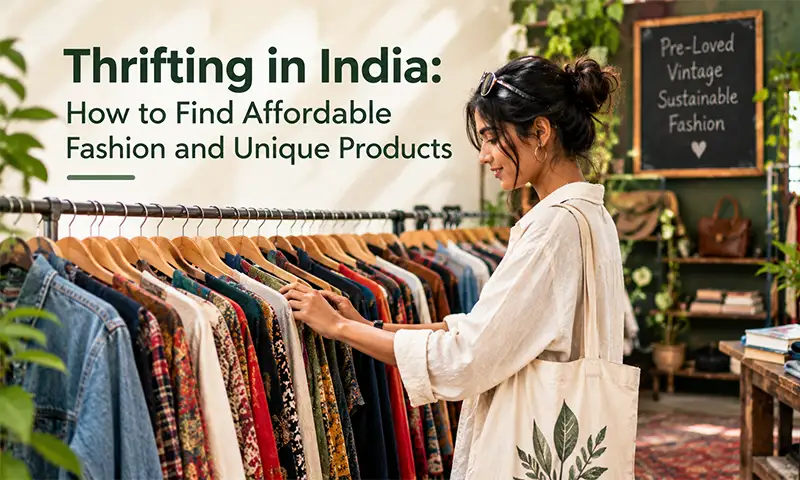
Thrifting in India
Wearing pre-owned clothes carried a negative mindset of people in the past. Thrifting in India today has now become a big cultural movement because the generation today is by Gen Z and millennials. Thrifting started in earlier days as an old-fashioned hobby with an underground niche; it later blossomed into a full-fledged lifestyle in a trendy way, driven by unique aesthetic desires and budget-friendly choices with natural consciousness. In order to redesign your wardrobe without emptying your wallet or harming the ecosystem, thrifting in India is a treasure trove. Exclusive pieces and vintage pieces that aren’t available in commercial outlets are now easier to find.
The emerging sustainable fashion
The global fashion industry has helped in global pollution for extreme water consumption, textile waste, and chemical run-off. It has created an ecological crisis. The demand for sustainable fashion in India, however, hasn’t decreased so far. Consumers are becoming self aware and conscious of the environmental footprint left by their shopping habits.
Shoppers these days actively choose to buy apparels that are pre-loved instead of mass-produced brand-new items. Thus, the clothing lifecycle is extended, and demand for resource extraction has substantially reduced. Thrifting in India is not merely saving money but a tangible statement against wasteful practices of fast fashion. Tons of wearable textiles are overflowing landfills; thus, by thrifting, we build a powerful and deeply personalised wardrobe. We also tend to remain ethically and environmentally responsible about where the money goes.
Discovering physical thrift stores in India
The core concept of utilising second-hand items is deeply rooted in Indian culture, and people find it honourable to pass their choices and traditions, such as wearing silk sarees or trading clothes, through generations amongst siblings. Curated physical thrift stores in India are a relatively new but rapidly evolving concept. Metropolitan cities like Delhi, Mumbai, and Bangalore are leading in thrifting. Creative spaces are now meticulously curated with racks of pre-loved clothing, ranging from regular casuals and quirky graphic tees to authentic designer and vintage wear. Apart from official retail stores, traditional street markets in Delhi and Mumbai are big grounds for export surplus. Navigating these crowded spaces, thus, requires a good deal of patience, negotiation skills, and a keen eye.
The rising pace of Indian thrifting
Scouring Indian street markets is not possible for everyone since it requires time, effort and energy. This is exactly why online thrift shopping in India has taken the internet. Digital shift assisted by the pandemic has made people clear out their closest and looking towards alternate ways to shop.
Platforms like Instagram are flooded today with independent thrift businesses. Passionate thrift curators source, mend, wash and style vintage, dropping new and exciting collections through visually appealing posts and limited -time stories.resale apps and e-commerce platforms have also entered the market making it safe and easy to buy and sell pre-loved garments made by secured payment gateways. Reliable nationwide shipping and buyer protection is also ensured for those who are completely new to this second-hand business scenario. Thrifting in India via these platforms is so convenient that one can filter their specific search by size, era, style and budget from their couch.
How to achieve affordable second-hand fashion
Navigating the world of affordable second-hand fashion requires strategic insight. Firstly, it is important to know the body size and measurements as per cloth sizing standards. Sizes from Extra Small to Triple XL are now designed with more superior alternatives to fit in from the slimmest to fastest section. Shopping online or at thrift stores demands relying on raw tape measure dimensions rather than printed tags.
Secondly, inspection of fabric quality and material is important to reassure whether the color would stay after wash or size wouldn’t shrink. Look out for missing buttons, permanent stains or broken zippers while buying. While purchasing a great piece, people don’t usually follow up with minor flaws but while purchasing through a thrift store, even details are undertaken. If a great piece comes at an affordable rate with minor flaws, one can easily get it altered at a tailor shop and make it a custom-fit masterpiece. Prioritize natural fibres than synthetic ones as they are durable and resistant towards environmental changes.
Lastly, Thrifting in India is a game of consistency that needs persistence. One cannot find a low price masterpiece just by looking. Regular browsing and keeping an open eye will eventually help in finding a spectacular piece to define your personal style.
Spend your weekend afternoons by digging into colourful racks at local pop-up flea markets or scroll through Instagram pages to curate highly individualised sustainable wearables blended by bold, personal styles. Make your wardrobe unique and seamless different from others by fundamentally shifting to stunning, unique pieces along with making a green and healthier planet. The joy of exploring thrifting in India is unparalleled.
