

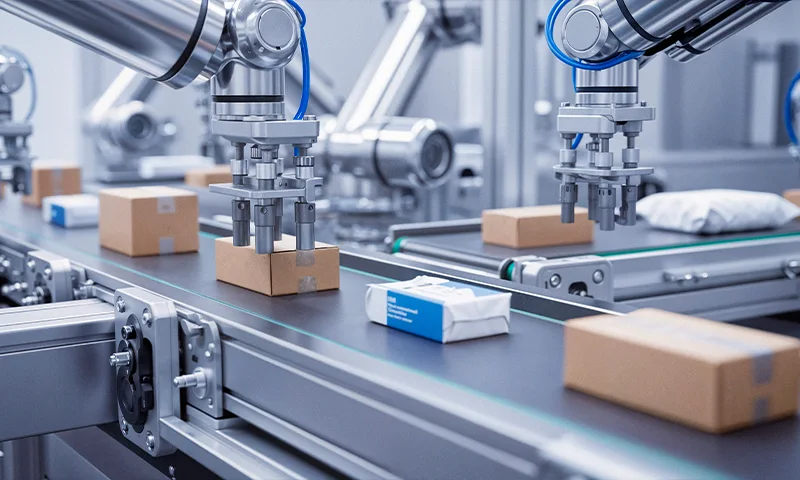
Stainless Steel Accumulation Tables
Food processing facilities need reliable solutions for managing product flow while maintaining strict hygiene standards. When it comes to moving and storing food products temporarily during processing, many wonder: are there options for stainless steel accumulation tables for food safety?
Yes, there are numerous food-grade stainless steel accumulation table options available, specifically designed to meet FDA and USDA food safety requirements. These tables are typically constructed from 304 or 316 grade stainless steel, which offers superior corrosion resistance and cleanability.
While the basic answer confirms availability, it’s important to understand the different types of accumulation tables and their specific applications, as choosing the wrong type could impact both food safety and operational efficiency. Continue reading to learn about the various designs available and how to select the right one for your specific food processing needs.
What Are The Different Types Of Stainless Steel Accumulation Tables?
There are three main types of stainless steel accumulation tables commonly used in food processing. First-in-first-out (FIFO) accumulation tables are designed with conveyor systems that maintain product sequence, making them ideal for products with strict freshness requirements. Bi-flow accumulation tables allow products to move in two directions, providing flexibility in production lines. Rotary accumulation tables feature a circular design that’s perfect for facilities with limited floor space.
Each type comes with specific features suited to different food products. FIFO tables often include pressure-sensitive controls to prevent product damage. Bi-flow tables typically incorporate multiple lanes with independent drives. Rotary tables usually feature variable speed controls and adjustable guide rails to accommodate different product sizes.
How Do You Choose The Right Accumulation Table For Your Food Processing Operation?
The selection process should start with analyzing your specific production requirements. Consider factors like product size, shape, and fragility. For instance, delicate items like baked goods require gentler handling systems, while sturdy packaging can withstand more robust accumulation methods. Also, evaluate your production speed, available floor space, and cleaning requirements.
It’s essential to match the table’s capacity with your line speed to prevent bottlenecks. A general rule is to choose a table that can handle 1.5 times your normal production rate to account for upstream disruptions.
What Maintenance Is Required For Food-Safe Accumulation Tables?
Regular maintenance is crucial for maintaining food safety standards and operational efficiency. Daily cleaning protocols should include thorough sanitization of all product-contact surfaces using food-grade cleaning agents. Weekly inspections should focus on checking drive components, bearings, and guide rails for wear or damage.
Preventive maintenance schedules typically include monthly lubrication of moving parts with food-grade lubricants and quarterly detailed inspections of all mechanical components. It’s important to maintain detailed maintenance logs to comply with food safety audits and ensure consistent performance.
What Safety Features Should You Look For In Stainless Steel Accumulation Tables?
Modern accumulation tables come equipped with various safety features to protect both products and operators. Emergency stop buttons should be positioned at strategic points around the table for quick access. Pressure sensors help prevent product crushing, while variable speed controls allow for smooth acceleration and deceleration to prevent product damage.
Guard rails and safety covers should be easily removable for cleaning but secure during operation. Look for tables with smooth welds and rounded corners to prevent product damage and bacterial harborage points. Additionally, ensure the control system includes backup sensors and fail-safe mechanisms to prevent product pile-ups during line stoppages.
How Can Accumulation Tables Improve Overall Production Efficiency?
When properly integrated into a production line, accumulation tables can significantly boost efficiency by acting as buffers during temporary line stoppages. They can help maintain consistent production rates by absorbing upstream variations and preventing downstream equipment from running dry.
Studies have shown that well-designed accumulation systems can reduce downtime by up to 25% by managing minor disruptions without requiring a complete line shutdown. They also provide valuable staging areas during product changeovers, allowing for smoother transitions between different products or batch runs. This flexibility can lead to increased throughput and reduced labor costs associated with manual product handling.
Taking The Next Step
Before making a final decision on an accumulation table for your food processing operation, schedule consultations with multiple equipment manufacturers to discuss your specific production requirements. Have them evaluate your facility’s layout, product characteristics, and production rates to recommend the most suitable solution for your needs.
