

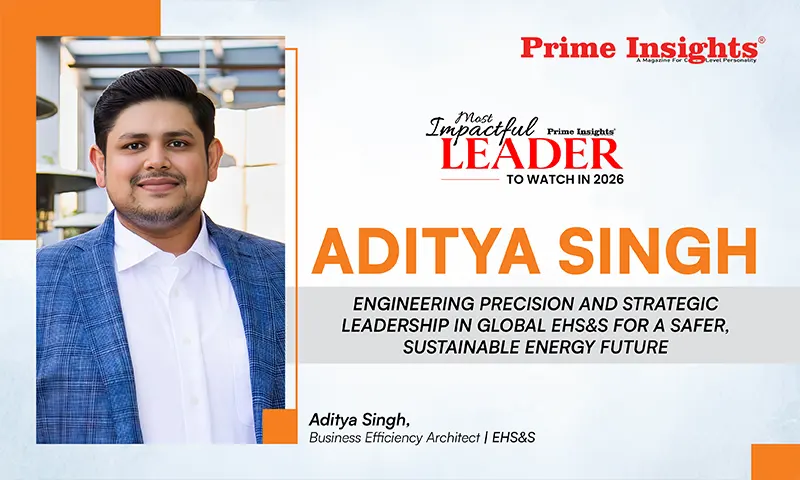
Aditya Singh | EHS&S
Can you provide a brief overview of your career journey?
My journey began with an academic foundation in engineering, earning a bachelor’s in civil engineering from Nagpur University, India followed by a master’s in environmental engineering from Texas A&M University – Kingsville, TX USA. During my master’s, I was selected and offered an intern role at United States Environmental Protection Agency (US EPA) in Washington, D.C. where I worked directly with EPA’s Assistant Administrator for Office of Water on two research projects. This foundation helped me to jumpstart my career as an environmental engineer focused on air quality permitting and compliance for oil and gas facilities across the U.S. lower 48 states. In this role, I supported multiple oil and gas operators to obtain environmental “license to operate” in their respective operating areas and develop compliance strategies in alignment with state and federal regulations. Over the past 17+ years of my career, I have grown from a technical specialist into a global Health, Safety, Environmental and Sustainability (HSE&S) leader at Occidental Petroleum Corporation (Oxy). With increasing roles and responsibilities within Oxy, my career has taken me across multiple continents — from managing environmental permitting and compliance at domestic level in the U.S. to leading comprehensive HSE&S programs internationally in locations like Oman, Algeria, Bolivia, and the UAE. Currently, I serve as the HSE Manager for Oxy’s International & Gulf of America business units, focusing on advancing corporate net-zero – environmental and sustainability goals.
What inspired you to pursue a leadership role in your industry?
My inspiration stems from the realization that HSE&S experts are the true custodians of a company’s “license to operate”. In an industry such as oil and gas where the fate of multi-billion-dollar projects hinges on meticulous planning for safety of employees & contractors, regulatory compliance and environmental stewardship, I felt a calling to bridge the gap between technical engineering rigor and efficient corporate governance. Early in my career, I understood that the ability to influence outcomes at scale, protect people, safeguard the environment, and enable responsible energy production is critical to drive continuous improvement and increase business value. Hence, this realization inspired me to pursue leadership roles in this industry where I could not only manage company’s operating management systems and influence HSE culture but also “engineer” them, driving strategic shifts toward a safer and more sustainable energy future.
Can you share some of the challenges you faced while climbing the corporate ladder?
One key challenge was translating complex regulatory and engineering concepts into layman’s language that resonated with company’s leadership teams and field operations in different countries with unique regulatory frameworks. Another was leading large-scale change – such as implementing enterprise HSE information systems and new operating management frameworks -while overcoming change management, closing data gaps, and ensuring consistent adoption across diverse business units.
How would you describe your leadership style?
My leadership style is systems-oriented, data-driven, and people-focused. I set clear expectations, build robust processes and digital tools, and then empower high-performing HSE teams through collaboration, mentoring, coaching, and accountability, ensuring they have both the structure and autonomy to deliver exceptional results. Lastly, I am a champion of “simplification” – eliminating unnecessary processes to focus on what truly keeps people safe and projects compliant.
What are the core values that drive your decision-making process?
Integrity and safety are non-negotiable; maintaining the license to operate and protecting the environment always comes first. I am equally driven by continuous improvement and operational excellence – driving efficiency through data-driven solutions and innovation that improve safety and environmental performance while also creating long-term business value.
What are some of the significant milestones you’ve achieved in your career?
Some important milestones include leading the development and implementation of Environmental Operating Management System, 5-year HSE business plan, priority policies and standards for Oxy’s domestic and international business units. Also, I helped Oxy obtain air quality permit for a $195 million expansion project of a Crude Oil Terminal that enabled the facility to load very large crude carriers (VLCCs) directly at the dock for the first time. It was the largest oil tanker ever to dock on a Gulf of Mexico Port export terminal, the first crude oil export facility in the U.S. to receive such a large vessel.
Can you discuss a project or initiative you led that had a substantial impact on your company?
As HSE Manager for Systems, Planning and Performance, I led the implementation of an enterprise HSE Information Management System and a suite of digital tools that automated incident notification, key performance indicator tracking, contractor safety dashboards, and predictive analytics. These initiatives significantly improved data integrity, reduced manual workloads, accelerated decision-making, and enabled more proactive safety and environmental management across multiple business units.
What awards or recognitions have you received that you are most proud of?
In 2016, I received a team award from the President of Oxy Oil and Gas in recognition of my contributions to merger and acquisition – due diligence activities, marking my first exposure to executive‑level leadership in a large global organization. I am also proud of being selected as a technical contributor and presenter at international industry conferences such as ADIPEC in Abu Dhabi, UAE. During my master’s studies, I was recognized in Who’s Who Among Students in American Universities and Colleges.
Additionally, I value professional fellowships from organizations such as the Indian Society of Civil Engineers and my invitations to serve as an awards judge for Society of Petroleum Engineers (SPE) Annual Technical Conference for 2026-28, the Globee Awards (Artificial Intelligence) and the Stevie Awards (International Business), reflecting my broader business and technical acumen beyond just the oil and gas industry. It also signals that my work resonates beyond my own organization and contributes to the broader industry conversation.
What are your key goals for the upcoming year?
My priorities focus on advancing digital transformation across HSE&S, strengthening ESG data integrity, and mentoring emerging leaders while supporting methane reduction and carbon‑neutral operations. In the near term, I am executing strategies aligned with voluntary commitments such as the World Bank’s Zero Routine Flaring by 2030 and Net Zero by 2050. I am also focused on strengthening global HSE governance and ensuring consistent, reliable ESG reporting across international and offshore business units through deeper integration of advanced analytics and automation. I am positive these goals when executed and completed will enable more proactive risk management and precise tracking of carbon and methane performance.
How do you envision the future of your industry, and what role do you see yourself playing in it?
The future of the energy industry is moving rapidly towards lower-carbon operations, stringent ESG expectations, and near real time transparency on emissions and safety performance. I see myself continuing as a strategic HSE&S leader who bridges engineering, innovative digital technologies, and governance to help companies meet carbon neutrality, methane reduction, and zero-harm goals while maintaining business competitiveness.
What strategies do you plan to implement to ensure continued success and growth?
I will continue to invest in robust HSE information management systems, standardized processes, and global frameworks such as the company’s Operating Management System to drive consistency and compliance. In parallel, I will prioritize talent development through the hiring, mentoring, and upskilling of HSE professionals. Key strategies also include expanding the use of data analytics, simplifying processes, engaging proactively with regulators, and strengthening cross‑functional collaboration. In addition, I will maintain strong partnerships with external regulatory and industry organizations, including the Society of Petroleum Engineers, to stay ahead of emerging trends and ensure innovative, effective compliance strategies.
What advice would you give to aspiring leaders who look up to you?
Build a strong technical foundation and learn to communicate effectively. As one of my mentors used to tell me – “it doesn’t matter what you say, what matters the most is how you say it”. Seek out complex assignments, stay curious about digital and regulatory trends, and never compromise on safety or ethics. In this industry, your reputation as a custodian of safety and the environment is your most valuable asset.
Can you share an example of how you’ve positively influenced your team or peers?
During my tenure as HSE Manager for an international business unit in the Middle East, our field operations and HSE employees faced daily issues with proper use and implementation of our permit to work system. I was then tasked to revitalize and chair a Steering Committee for this system to improve the effectiveness of this system. By addressing permit to work gaps, instituting structured training, feedback mechanisms, daily review of action plans, and engaging cross-functional subject matter experts, we strengthened systems effectiveness. These improvements transformed a challenged work permit process into a continuous improvement tool, resulting in measurable enhancements to day-to-day field safety for both operations teams and contractors.
What role does technology play in your leadership approach?
Technology is central to how I lead—it enables consistency, transparency, and scalability across complex operations. From designing enterprise HSE information systems to using predictive analytics and digital tools like advanced emissions monitoring, virtual assistants and automated permits, I leverage technology to streamline workflows, enhance compliance, and allow teams to focus on critical safety and environmental decisions.
How do you maintain a work-life balance while fulfilling leadership responsibilities?
For me, balance comes from disciplined planning and clarity of priorities. I focus on high-impact activities, delegate effectively, and use systems to manage information rather than relying on constant firefighting. I make time for personal well-being, rest and reflection, which ultimately makes me a better leader. I also recognize that sustainable performance requires taking time out for family and personal interests, which in turn makes me more effective and present at work.
What personal habits or routines contribute to your effectiveness as a leader?
I maintain a habit of structured goal-setting, using annual HSE business planning and clearly defined metrics to keep myself and my teams aligned. I also regularly review key performance indicators and audit findings, which keeps me close to the action plans, helps me spot data trends early, and reinforces a culture of accountability and continuous improvement.
Who are some leaders or mentors who have inspired you throughout your career?
I have been fortunate to work with senior HSE and business leaders at Oxy such as HSE Vice Presidents and Business Unit President & General Managers who modeled how to connect field experiences with corporate strategy and governance. Their guidance in balancing competing priorities within financial constraints has been instrumental in my growth. Also, my master’s thesis advisor during my time at Texas A&M University – Kingsville and early supervisors in consulting and internship also shaped my thinking about rigor, ethics, and the importance of mentoring the next generation. Their influence shaped my belief that strong values and strong performance go hand in hand.
How do you incorporate social responsibility and sustainability into your business practices?
Sustainability is embedded into my work through emissions reduction initiatives, regulatory stewardship, ESG reporting integrity, and ensuring projects align with global ESG frameworks and standards. This includes preparing annual Climate & Sustainability reports, managing methane measurement programs, carbon neutral focused pilots, and strict adherence to World Bank’s zero routine flaring guidelines -these initiatives and voluntary programs demonstrate how environmental responsibility is built into our day-to-day operations.
Can you share any philanthropic initiatives you are passionate about?
I am deeply passionate about professional service and mentorship. I dedicate significant time to the industry organizations and other engineering societies to share knowledge and foster the growth of young engineers globally. Supporting such professional groups, mentoring young engineers, and contributing time to industry study groups and technical conferences are ways I give back to both the profession and the broader community.
What legacy do you hope to leave behind as a leader?
I hope my legacy is that of a leader who proved that rigorous engineering, strong ethics, and smart use of technology can make high-risk energy operations safer, cleaner, and more efficient. If the systems I helped build continue to protect people, reduce emissions, and guide future leaders long after I am gone, I will consider that a meaningful legacy.
How do you define success, both personally and professionally?
Professionally, I define success as enabling organizations to achieve ambitious production and growth goals while continuously improving safety and environmental performance, with no compromise on compliance. Personally, success means growing as a mentor, contributing to the HSE profession globally, and staying true to the values that guided me from my early days as a student and young engineer.
What message would you like to convey to the next generation of leaders?
To the next generation, I would say: be adaptable and embrace complexity rather than avoiding it, our industry needs leaders who are comfortable making right decisions when they face multifaceted challenges at the same time such as engineering precision, regulatory frameworks, and sustainability. Lead with integrity, invest in your technical and digital skills. Lastly, value long-term thinking ensuring that today’s decisions do not create tomorrow’s risks for the people around us and communities we operate in.
