

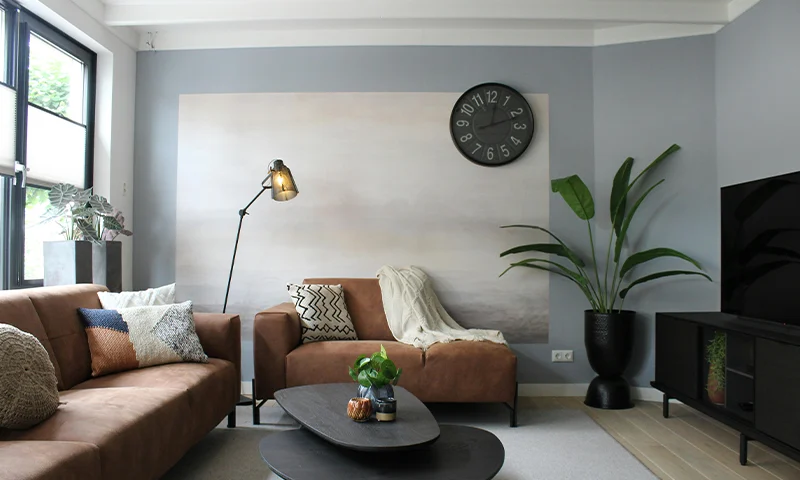
Guide to Decorating Empty Walls and Corners
Furniture gets sorted, and then the room sits in a half-finished state for months. Walls stay bare. Corners stay empty. Not because people do not care, but because these spaces feel harder to solve than picking a sofa or a bed. There is no obvious answer, and so nothing gets done.
A wall clock on the right wall and floor lamps in the right corner are genuinely two of the easier fixes for this problem. Here is what actually matters when using them.
Wall Clocks and Getting the Size Right
Almost everyone who buys a wall clock for the first time buys one that is too small. It is a very consistent mistake, and it happens for a straightforward reason. In a shop, you are standing close to the clock, maybe two or three feet away. At home, you are viewing it from across the room, which could be twelve to fifteen feet. The size that looked right up close looks completely different at that distance.
The clock that makes you hesitate slightly because it seems large is usually the right one. The one that feels like a comfortable, sensible choice in the shop is the one you will want to replace in a few months.
Height Matters More Than Centre
People tend to hang things at eye level because that is where things feel natural to reach. On a wall, though, eye-level placements tend to look unintentional, like something was put there without much thought.
A wall clock hung a little above eye level, not dramatically high, just higher than the instinct says, reads as a deliberate placement. The wall looks considered rather than randomly filled.
If there is a sofa or a cabinet sitting against that wall, use the top edge of that furniture as a starting reference. A clock that sits in proportion with what is below it looks connected to the room. One that is just centred in blank wall space looks like it is waiting for other things to arrive around it.
Colour Contrast on the Wall
A light coloured wall clock on a light wall almost disappears when viewed from across the room. It registers up close and nowhere else.
Contrast is what gives a wall clock presence at a distance. Dark clock on a light wall. Light clock on a dark wall. This is a small decision that changes how much the clock actually contributes to the room versus how much it just technically occupies space in it.
Corners and Why Floor Lamps Work in Them
A corner that sits empty draws attention in the wrong way. It makes a room feel unresolved. Filling it with random things that have no other home makes it look worse. Most people end up in this cycle of the corner being either empty or cluttered, and neither one feels right.
Floor lamps fit corners better than almost anything else available. The shape is naturally suited to that space, tall and narrow, and they do not spread out and compete with the furniture around them. More importantly, they add light, which means they have a functional reason to be there. An object that earns its place by being useful never looks out of place.
Arc Lamp or Straight Lamp
This depends entirely on where the corner is and what is near it.
A corner in the living room that sits next to a sofa or a reading chair works well with an arc lamp. The arm extends out over the seating, and the light lands where people actually are. The shape of the lamp makes it look purposeful rather than decorative.
A bedroom corner is a different situation. An arc lamp in a bedroom tends to feel too dominant. A straight lamp with a fabric shade is the better fit. It adds warmth to the corner without the room feeling like it is overdone.
Making the Clock and Lamp Feel Like They Belong Together
They do not need to match. Matching sets look planned in a way that feels slightly overdone.
One shared detail is enough. Same metal finish across both. Similar wood tones in both. Matte black in both. Find a finish that is already somewhere in the room and carry it into both pieces. That one connection makes them feel like they were chosen for the same room rather than bought at different times with no thought given to how they relate.
Clear space around each one matters too. A clock surrounded by other wall pieces loses its effect. A floor lamp in a corner full of clutter does the same. Both of these objects need a little breathing room to actually register in the room the way they should.
Disclaimer: This article is for informational and educational purposes only and should not be considered investment, tax, or financial advice. Tax rules, bond availability, yields, and regulations may change. Any external links are provided for reference only and do not constitute an endorsement or guarantee of their content. Readers should verify the latest information and consult a qualified financial or tax professional before investing.
