

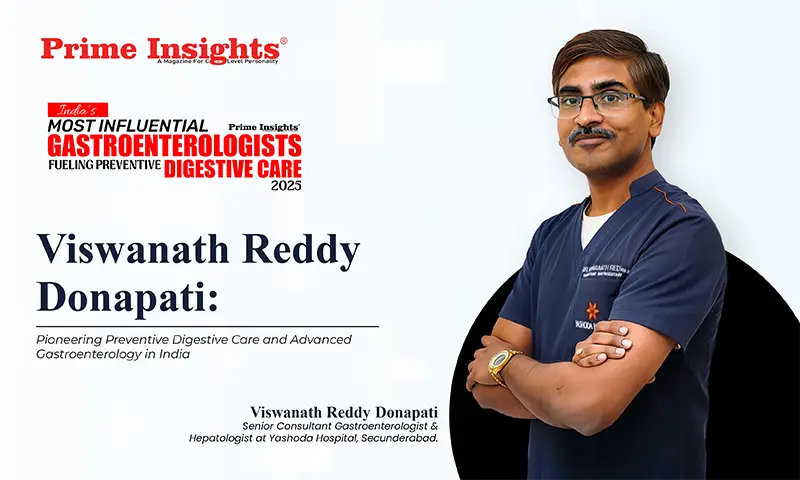
Viswanath Reddy Donapati
The majority of the body’s serotonin—the key chemical for regulating mood and happiness—is produced in the gut, not the brain. This explains why stress gives you “butterflies” and why anxiety can feel “gut-wrenching,” showing the profound connection between our mental state and the health of our digestive system. The field of medical gastroenterology and hepatology is currently navigating a surge in lifestyle-related disorders, making it one of the most critical specialties in modern medicine. The rise of fatty liver, IBS, and cancers fueled by lifestyle is shifting Indian gastroenterology from reactive to proactive, preventive care. Competition demands specialists who blend advanced technology with public awareness and ethical, patient-centric treatment.
A beacon in this specialized domain is Dr. Viswanath Reddy Donapati, Senior Consultant Gastroenterologist & Hepatologist at Yashoda Hospital, Secunderabad. His journey is defined by academic rigor—an MBBS from Gandhi Medical College, MD in Internal Medicine from Osmania Medical college, Hyderabad and a DM in Medical Gastroenterology from the prestigious Christian Medical College, Vellore, followed by a fellowship in advanced endoscopy. With over 13 years of experience, Dr. Reddy’s special interest lies in advanced endoscopy and endoscopic ultrasound (EUS), driven by a fascination with the liver’s regenerative capacity and a commitment to prevention.
Dr. Reddy’s practice has a holistic, modern approach to digestive wellness. He leverages cutting-edge technology like EUS and high-definition image-enhanced endoscopy to achieve timely, perfect diagnosis and minimally invasive treatment for conditions like severe pancreatitis or early cancers. Crucially, this technological expertise is integrated with a strong focus on preventive surveillance and lifestyle counseling, urging patients toward “mindful eating,” stress management, and abstinence from addictions.
In the spotlight is Dr. Viswanath Reddy Donapati, Senior Consultant Gastroenterologist & Hepatologist, Yashoda Hospital, Secunderabad, in an interview for our prestigious “India’s Most Influential Gastroenterologists Fueling Preventive Digestive Care – 2025” edition. Learn from his insights and valuable lessons as a practitioner to excel and make it to the elite. Stay tuned and know his tale of success.
Prime Insights: Could you introduce yourself and share your journey into the field of gastroenterology?
I am Dr. Viswanath Reddy, Senior Consultant Gastroenterologist working at Yashoda Hospital, Secunderabad. I have done my MBBS from Gandhi Medical College, Hyderabad, and MD in Internal Medicine from Osmania Medical College, Hyderabad.
Later, I did DM in Medical Gastroenterology from the prestigious Christian Medical
College, Vellore. Throughout this journey, my parents and my wife were my inspiration and support, guiding me at every step. I then did my fellowship in advanced endoscopy at CMC Vellore. I have been working for the past 13 years in the field of gastroenterology with a special interest in advanced endoscopy and endoscopic ultrasound (EUS). My journey has been driven by a passion for early diagnosis and minimally invasive therapy in digestive diseases, integrating patient care with clinical innovation. With family support, Friends and Teacher’s guidance and god’s blessings, I could reach this position to serve the Society as a
Gastroenterologist
Prime Insights: What inspired you to specialize in digestive health and preventive care?
The rising burden of lifestyle-related digestive disorders inspired me to focus on gastroenterology. Seeing patients suffer from preventable diseases reinforced my commitment to promote early detection, lifestyle modification, and patient education as key pillars of preventive digestive health. Our body organs, the liver in particular, have regenerative capacity, and the fascination remains how it handles the amount of toxins we consume knowingly or unknowingly. We are susceptible to disease when it is overwhelmed, as we see in alcoholics. Even fatty liver occurs when our caloric intake and expenditure mismatch. I thought I could help people become aware of the prevention aspect by becoming a gastroenterologist.
Prime Insights: How do you define the importance of preventive gastroenterology in today’s fast-paced lifestyle?
In an era dominated by processed foods, stress, sedentary habits, alcohol, and drugs, preventive gastroenterology is crucial. Early screening, lifestyle counselling, and awareness help identify diseases like obesity, fatty liver, cirrhosis, reflux, and colorectal cancer before complications develop, improving long-term outcomes. Allotting time for maintaining good health is pivotal in facing the challenges of a fast-paced lifestyle.
Prime Insights: What are the most common digestive issues you encounter, and how can they be prevented?
Fatty liver, alcoholic liver disease, pancreatic problems, gallstones, acid reflux, irritable bowel syndrome (IBS), peptic ulcer disease, and some cancers are increasingly common now-a-days. Balanced nutrition, regular exercise, adequate sleep, stress management, abstinence from addictions, and timely medical check-ups are key preventive measures to maintain gut health.
Prime Insights: Can you share a breakthrough case or patient success story that reinforced your commitment to this field?
One memorable case is a patient with acute severe pancreatitis with multiple organ dysfunction who had infected pancreatic collections and was managed in the ICU on a ventilator and dialysis support. He came out of critical status after EUS-guided drainage of the pus filled collection (cystogastrostomy) followed by direct endoscopic necrosectomy (DEN) without the need for surgery. Timely diagnosis and management allowed curative treatment, showing the life-saving potential of advanced procedures and preventive surveillance.
Prime Insights: How do you integrate lifestyle changes, diet, and holistic practices with clinical treatments for digestive health?
I emphasize a multidisciplinary approach—combining evidence-based medicine with dietary guidance, physical activity, and stress management. We are what we eat, and our scriptures classify food into Satvik, Rajasik, and Tamasik types, which influence our behavior and our overall health, and so mindful eating is the key. Personalized nutrition plans, yoga, and mindfulness are added alongside medical therapy to achieve sustainable digestive wellness.
Prime Insights: What role do technology and advanced diagnostics play in early detection and prevention of GI diseases?
Modern tools like EUS, high-definition endoscopy, and image-enhanced endoscopy, along with artificial intelligence, help us diagnose and treat cancers, polyps, and biliary diseases more accurately and early on. These technologies transform care from reactive to proactive, allowing timely interventions that save lives.
Prime Insights: How do you address rising concerns such as fatty liver, IBS, GERD, and colon health in your practice?
I adopt a comprehensive strategy—risk assessment, lifestyle counselling, and individualized treatment. Diet and lifestyle changes are emphasized to the patients. Regular liver monitoring, gut microbiome optimization, reflux management, and colon screening programs form the core of my preventive practice.
Prime Insights: What strategies do you recommend for improving public awareness about preventive digestive care?
Public education through health talks, community camps, media outreach, and digital platforms is essential. Empowering people with simple messages on diet, early symptoms, and screening can transform community health outcomes. The issues of alcohol, tobacco, and drugs, along with their effects on digestive health, need attention; discussions in various public forums can help us achieve our goal.
Prime Insights: How do you ensure trust, compassion, and transparency in doctor-patient relationships?
I prioritize open communication, shared decision-making, and empathetic listening. Patients are partners in their care—understanding the diagnosis, treatment options, and long-term goals builds trust and adherence. I consider the patient to be similar to my relative and accordingly provide my advice.
Prime Insights: Have you been part of any research, publications, or collaborations that have advanced the field of gastroenterology?
Yes, I have contributed to multiple case reports and presentations, including advanced EUS techniques, rare pancreaticobiliary disorders, and stent-in-stent management in malignancy, aiming to share clinical insights and refine therapeutic standards.
Prime Insights: What milestone achievements or recognitions do you consider highlights of your career so far?
Being awarded the FSGEI Fellowship, the FISG award, and the Icon of the Year award by the Times of India in 2024; completing more than 13 years of dedicated service at Yashoda Hospital; and being invited as faculty at major national conferences are proud milestones reflecting professional excellence and patient trust.
Prime Insights: How do you balance clinical practice, research, and patient education in your professional journey?
By having structured schedules—dedicated time for patient care, academic writing, and public health education. Continuous learning and mentoring young doctors also help me stay engaged and balanced across all domains.
Prime Insights: What advice would you give to aspiring gastroenterologists or young doctors entering this field?
Stay curious, compassionate, and committed to lifelong learning. Combine clinical skill with empathy, and embrace technology and preventive care to truly make a difference in your patients’ lives. I suggest juniors not to run the rat race for financial gains but maintain a balanced approach to work and live life at large.
Prime Insights: Finally, what message would you like to share with readers about digestive wellness and preventive healthcare for the future?
Digestive wellness begins with daily choices—eat mindfully, avoid addictions, stay active, manage stress, and never ignore early symptoms. Prevention is the best treatment; regular screenings and healthy habits ensure a longer, disease-free life.
