

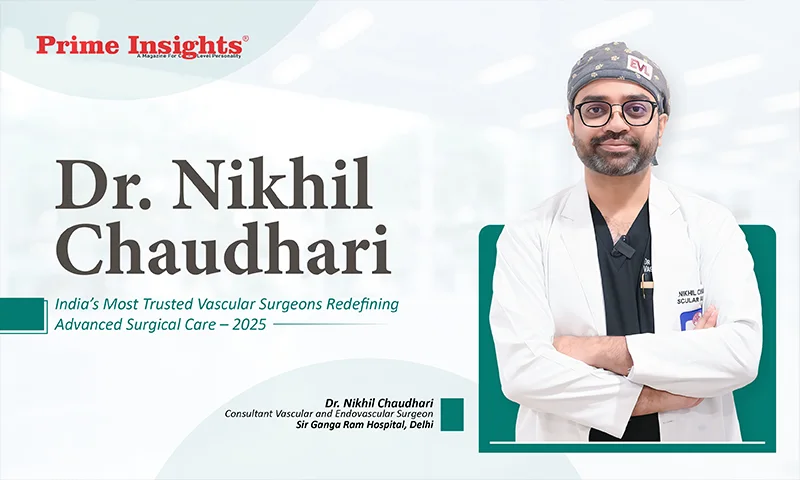
Dr. Nikhil Chaudhari
Vascular surgery is the most evolving branch in modern healthcare. The surgery plays a crucial role not only in patient care but also by providing a strong supporting pillar of backup to many specialties like nephrology, oncology, gynecology, transplant surgery, plastic surgery, and gastroenterology.
Today we have Dr. Nikhil Chaudhari, Consultant Vascular and Endovascular Surgeon, Sir Ganga Ram Hospital, Delhi, joining us to have a thorough discussion on his journey in the vascular surgery field.
Could you share your professional journey and what inspired you to specialize in vascular surgery?
My passion for patient care ignited during my internship at Rajiv Gandhi Medical College, Thane, affiliated with a municipal hospital. Excelling in the entrance exam, I pursued a Masters in Surgery at a prestigious Central Government institute in Andheri, Mumbai. Initially unaware of vascular surgery as a super-specialty, I was drawn to its vast scope after discovering endovascular techniques. The ability to treat nearly any artery or vein in the body—except those in the brain and heart—captivated me, inspiring my specialization in this dynamic field.
How would you describe the role of vascular surgery in advancing modern healthcare?
Vascular surgery is a cornerstone of modern healthcare, rapidly evolving to address complex arterial and venous conditions. Beyond treating vascular diseases, we provide critical support to specialties like nephrology, oncology, gynecology, transplant surgery, and gastroenterology. Our expertise in diabetic foot care, vascular access for dialysis, and procedures like carotid stenting and aneurysm repair ensures comprehensive care. Uniquely, vascular surgeons combine endovascular and open surgical skills, adhering to precise guidelines to deliver optimal outcomes.
What differentiates your approach to patient care and surgical excellence?
My approach is patient-centric, built on availability, compassion, competence, and trust. I’m accessible 24/7 via platforms like WhatsApp, fostering open communication. Patients consistently praise my empathetic and transparent care, which I combine with cutting-edge techniques to ensure both clinical excellence and emotional support.
Can you highlight a breakthrough surgery or case that has been particularly impactful in your career?
Several cases have shaped my career, including pioneering intravascular lithotripsy in the aorto-iliac segment at Sir Ganga Ram Hospital, Delhi. I’ve performed over 200 venaseal glue therapy procedures for varicose veins, alongside complex percutaneous aortic aneurysm repairs and aorto-iliac revascularizations. Each case underscores the transformative power of innovative vascular techniques.
How do you ensure precision, safety, and innovation in complex vascular procedures?
At Sir Ganga Ram Hospital, we leverage Asia’s first Artis Pheno hybrid vascular cath lab by Siemens, dedicated to advanced vascular interventions. Six ultrasound color Doppler machines enhance precision and safety. Our NABH-certified hospital upholds rigorous standards, and we pioneer technologies like Penumbra CAT 16 for clot aspiration, bioabsorbable stents, and surgeon-modified endografts for complex aortic aneurysms. Regular workshops and a training institute for surgical residents keep us at the forefront of innovation.
What role do minimally invasive techniques, robotics, or advanced imaging play in your practice?
Minimally invasive endovascular techniques, such as peripheral angioplasty, allow interventions through a needle hole, enabling discharge within 24 hours. Advanced imaging is critical for procedures like arteriovenous malformation treatment, uterine and bronchial artery embolization, and percutaneous aortic aneurysm repair using artery-sealing devices. These technologies eliminate the need for incisions, enhancing recovery and outcomes.
What are the most common vascular conditions you treat, and how can they be prevented or managed early?
We commonly treat varicose veins and gangrene due to peripheral arterial disease (PAD). Prevention involves lifestyle changes, such as regular exercise and smoking cessation, and routine check-ups for early detection. For varicose veins, compression stockings under a vascular surgeon’s guidance are effective. Early intervention with medications can prevent limb loss in PAD, emphasizing the importance of timely care.
How do you balance the emotional and physical demands of your profession while ensuring compassionate care?
Maintaining balance requires a disciplined lifestyle, including a healthy diet and regular walking. Music helps me unwind, while a supportive work environment and the joy of seeing patients recover drive my passion. This balance enables me to deliver compassionate, high-quality care consistently.
Can you share milestone achievements or recognitions reflecting your contributions to vascular surgery?
I’ve authored a paper on glue therapy for varicose veins in the Indian Journal of Vascular Surgery and contributed chapters to medical publications. As a faculty member at Endovascular Live, India’s largest endovascular conference, I share expertise nationally. These milestones reflect my commitment to advancing the field.
What role does continuous research and training play in staying ahead in this specialized field?
Continuous research and training are vital to staying current with evolving guidelines and technologies. As a co-guide for super-specialty dissertations and a lecturer for the National Board of Examinations, I engage with the latest advancements, ensuring my practice remains cutting-edge.
How do you build patient trust and confidence, especially with life-threatening conditions?
Clear, thorough communication is key. I personally explain conditions, treatments, and success rates to patients and their families, providing regular updates. This transparency, paired with delivering the highest standard of care, builds trust and reassures patients facing critical conditions.
In your opinion, what are the biggest challenges and opportunities in vascular surgery today?
Challenges include managing complications from unqualified practitioners or delayed treatments, as well as financial barriers for patients without insurance. However, opportunities abound with India’s largest team of vascular surgeons and advanced resources at our disposal, enabling exceptional outcomes for complex cases.
Have you collaborated with hospitals, research institutions, or global experts to advance surgical outcomes?
Yes, our hospital hosts international fellowships to train global surgeons. I’ve also applied to extend vascular surgery services in the UAE, fostering cross-border collaboration to enhance surgical outcomes.
What advice would you give to aspiring surgeons looking to specialize in vascular surgery?
Vascular surgery is a rewarding field with immense scope, especially as India’s healthcare infrastructure advances. It offers unparalleled satisfaction through innovative, life-saving interventions. Dedication to learning and patient care is essential for success.
What vision do you hold for the future of vascular surgery in India and globally?
I envision vascular surgery as a comprehensive solution, blending open surgeries like bypasses with endovascular techniques like stenting. In the future, specialized vein and artery clinics will emerge in every community, staffed by experts offering seamless diagnosis and treatment for vascular conditions.
